Media literacy is finally in the curriculum. It should be in your comms plan too.
Media literacy is no longer a nice-to-have — it’s a critical skill for anyone engaging with the public, especially as misinformation rises and trust in institutions falls.
17 June 2025
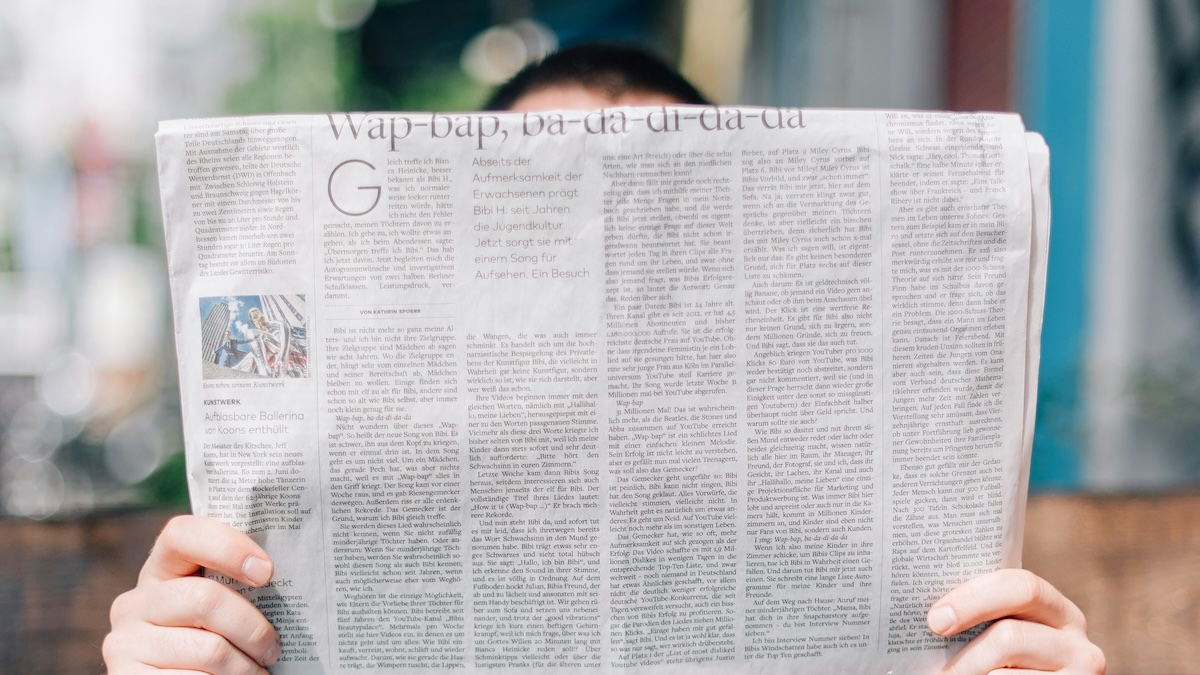
Photo by Roman Kraft on Unsplash
Australia has a media literacy problem. But don’t take my word for it; Governor-General Sam Mostyn recently said misinformation and disinformation were “the great scourge of our time”. Her comments come as the federal government moves to roll out a new model of civics and media education across Australian schools, following dismal results in national testing.
Fewer than one in three Year 10 students are proficient in civics. Trust in democratic institutions is declining. And too many young people, and adults, can’t easily distinguish between fact, opinion, and persuasion. That should frighten everyone.
So, as part of a broader civics push, media literacy will now be explicitly taught in Australian classrooms from kindergarten to Year 10. The national curriculum update introduces a new teaching resource, ‘Media consumers and creators’, which helps students analyse media, understand bias, question online content, and create ethical communications of their own.
It’s a welcome move. But it also raises a bigger question: What about everyone else? In particular, what about all those adults who are already speaking on behalf of organisations and engaging with journalists, and who are not entirely sure how the media works?
That’s why we include media literacy in our media training sessions. Not as a side topic, but as a core skill.
Why we teach media literacy in our media training
Too many media training sessions focus only on the performance: what to wear, how to sit, where to look, how to “bridge” to a talking point. Yes, that’s important, but it’s only part of the picture.
If you don’t understand the environment you’re speaking into or how it operates, even the slickest message can struggle to land.
We teach our clients how the media works: how stories get selected, shaped and shared, and how audiences interpret them. Why? Because real media confidence comes from knowing what you’re dealing with.
There are a few moments that shaped our approach:
Even smart people get it wrong: Years ago, a colleague at Treasury was complaining about a biased article in the paper. When I looked, it turned out to be an opinion piece. That moment stuck with me because this was a sharp, well-read, well-educated person. If they couldn’t tell the difference and spot a clearly marked opinion piece, how many others were missing it too?
Not everyone reads like a journalist: My own habits were shaped by journalism school and early newsroom jobs, where reading the news critically is second nature. One of my lecturers, an old-school investigative reporter, told us that the most valuable thing a journalist can develop is a finely tuned “bullshit detector”. He wasn’t wrong.
Clients often ask: Why did that story run? Why didn’t ours? Understanding news values, angles, and editorial judgement helps spokespeople see the story from the journalist’s side. That makes them more persuasive, and less defensive, when things don’t go to plan.
Three ways to build your media BS detector
You don’t need a journalism degree to become media literate. But you do need to develop habits that sharpen your instincts and help you engage with news and media more critically. Here are three we recommend to every client.
1. Read outside your comfort zone
If you’re a regular reader of The Guardian, spend a week with The Australian. If you live in the world of the AFR, try the ABC. Better yet, check in with international sources that aren’t rooted in the Anglosphere media model — Al Jazeera, Deutsche Welle, or the South China Morning Post all publish excellent English-language journalism.
This isn’t about seeking “balance” in the false-equivalence sense (because don’t get me started on that). It’s about exposure to different editorial priorities. Different ideas of what matters. Different voices being quoted, or ignored.
When you widen your lens, you start to see how the same issue can be framed in radically different ways.
2. Make sure the lead is backed up
When I worked at AAP, one key rule was drilled into us: whatever’s said in the lead needs to be backed by a quote in the body. It ensured fairness, as well as clarity and credibility.
In today’s clickbait-driven landscape, that discipline matters more than ever. Too often, the headline or first line of a story makes a claim that isn’t properly supported in the text. Even worse, the quote that follows can actually contradict the lead.
When you read news (or prepare to be in it), ask:
• Where’s the quote that backs up this claim?
• Is the most dramatic part of the story supported by what’s actually said?
• Does the language of the lead reflect what the speaker meant, or what the editor wanted it to sound like?
These are questions you’ll need to ask both as a media consumer and as a spokesperson.
3. Always ask what’s missing
What’s not said can matter as much as what is.
• Who isn’t quoted?
• What perspectives are missing?
• Does the story rely on a single source or lobby group?
• Are the facts clearly sourced, or are they assumptions dressed up as facts?
This is where reading outside your lane can be useful, because it can expose you to voices and perspectives that may not be getting an airing in your journal of choice.
Being media literate doesn’t mean being cynical. It means being alert to choices — editorial, structural, and linguistic — that shape how we understand the world.
It’s not just for Year 10s
The new national curriculum will hopefully help build a generation of more engaged, discerning citizens. But for everyone already in the media arena, especially those representing organisations, briefing boards, or facing scrutiny, media literacy isn’t optional. It’s a professional competency.
Want to improve your BS detector? Get in touch. Or learn more about our media training services.